How Long Does Mold Remediation Take? A Stage-by-Stage Timeline
“How long will this take?” is one of the first questions people ask, and the honest answer is that it depends on the job. A small patch of mold on a bathroom wall and a roof-leak ceiling with wet insulation above it are very different projects. Published cost and industry guides generally describe small residential jobs as taking a few days of on-site work and larger jobs a week or more, with drying and rebuilding added on top. Instead of promising a number in the abstract, this post explains the stages so you can understand where the time goes and what to ask for in a written scope.
Stage 1: Inspection and scope (one visit, then a written plan)
The work starts with a visit. A remediator looks at the visible mold, finds the likely moisture source, checks moisture levels in nearby materials and decides what has to be removed, what can be cleaned and what has to be fixed by another trade. The result should be a written scope of work and a price. If you have also hired an independent licensed assessor, there may be a written protocol that the remediator follows. In Florida, the assessor and remediator are separate licenses, and generally the same company cannot do both on one property within 12 months (section 468.8419). Scheduling the assessor and getting the report can add a few days before work begins.
Stage 2: Fixing the water
Mold needs moisture, so the source has to be stopped. That may be a plumber repairing a supply line, a roofer patching a leak, an AC technician clearing a drain or a contractor fixing drainage. This step can be quick or it can be the longest part of the schedule, because it depends on other trades. Cleaning mold before the leak is fixed wastes money.
Stage 3: Setting up containment
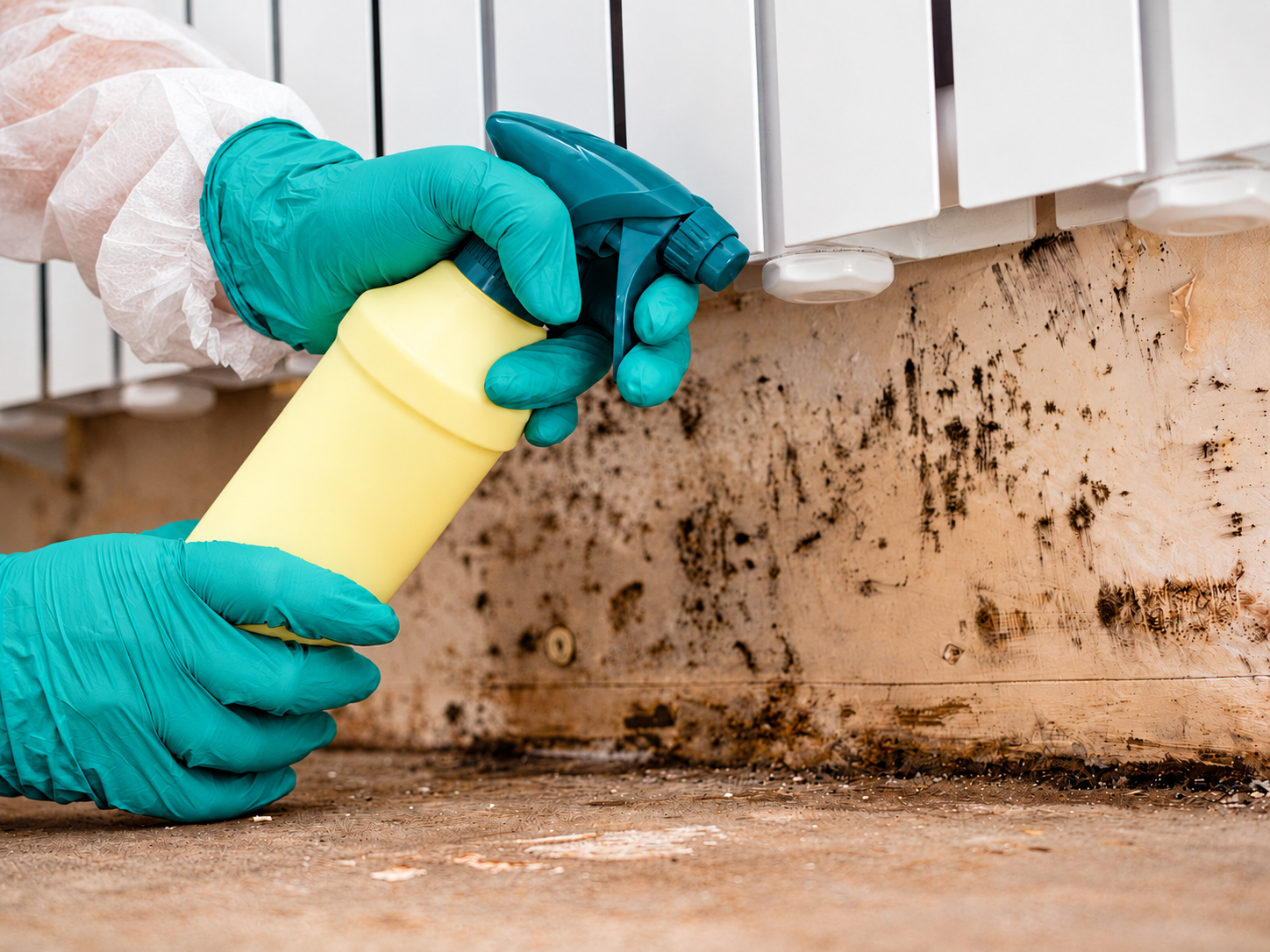
Before anything is removed, the crew seals the work area with plastic barriers, sets up HEPA air filtration and negative air so spores stay in the work zone, and protects floors and furniture. Setup typically takes hours for a single room and longer for several rooms. The goal is to avoid spreading spores to the rest of the house, which is why professional work looks different from a DIY scrub.
Stage 4: Removal and cleaning
Materials that are porous and moldy, such as wet drywall, insulation or carpet padding, are cut out, bagged and removed. EPA says porous materials may need to be discarded if mold grows on them, while hard surfaces can often be cleaned. Remaining surfaces are HEPA vacuumed and damp wiped. This is the stage most people picture. For a typical room it can take a day or two. Large or hidden damage can take longer, particularly if more is found behind a wall than the inspection suggested.
Stage 5: Drying
EPA advises drying wet materials within 24 to 48 hours when possible, but structural wood, concrete and thick materials may need several days with fans and dehumidifiers. The crew measures moisture before closing up. This stage cannot be rushed. Rebuilding over damp framing invites the mold to return.
Stage 6: Verification
For larger jobs, an independent assessor checks the work with a visual inspection, moisture readings and sometimes samples. Lab results can take a few days. If the area does not pass, it is cleaned again and rechecked. See post-remediation verification and clearance.
Stage 7: Rebuild
Replacing drywall, insulation, paint, trim and flooring is often a separate scope and can take as long as the remediation itself. Ask in writing whether the quote includes rebuilding. See how to read a mold remediation quote.
What makes a job take longer
- Size: more square feet means more containment, removal and disposal.
- Hidden damage: growth behind walls or under floors is found only when they are opened.
- Materials: plaster, thick framing and concrete dry slowly.
- HVAC involvement: ducts and air handlers add specialized work.
- Access: attics and crawl spaces are slow to work in.
- Other trades and approvals: plumbers, roofers, insurers, landlords or condo boards.
- Weather: a wet week can slow drying and roof repairs.
What you can do to keep it moving
- Stop the water source as quickly as possible.
- Photograph the damage before work begins.
- Clear access to the area and the AC closet.
- Approve the written scope promptly and ask how changes are handled.
- If you rent, ask the landlord to approve the work in writing. If it is an insurance claim, ask the insurer what it needs before work starts.
How long before you can use the room again?
Many people ask whether they can stay home during the work. Often yes for small, contained jobs, but it depends on where the work is and who in the house is sensitive to mold. The CDC says people with asthma, allergies, lung disease or weakened immune systems are more likely to have problems around mold. Ask for the answer in your written scope, including which rooms will be sealed, when they can be used again and what the dry-out and verification steps are.
For a timeline on your own job, call (352) 668-9909 or send photos. We will give you a written scope with the steps and a schedule once we have seen it.
Three sample timelines (illustrative)
These are not promises or past customers, just ways to picture how the stages stack up.
- Small bathroom wall: fix the leak, one day of containment and removal, a day or two of drying, then repair and paint.
- Bedroom ceiling after a roof leak: roof repair first, then removal of wet drywall and attic insulation, several days of drying, a clearance check if you want one and then the rebuild.
- Multi-room job with an AC drain overflow: AC repair, containment across rooms, removal, cleaning, longer drying and verification, then rebuilding over several days or weeks.
In each case, the written scope should show the order of work and who is responsible for each step.
Need a second opinion on what you found?
Call (352) 668-9909 or send photos. We will tell you honestly whether it is a small job you can handle, a leak for a plumber or roofer to fix first, or a job for a licensed remediator. PureGuard Restoration is a remediation contractor and does not test for mold. For testing or a clearance check, we point you to an independent licensed assessor.