Home / Gainesville / Storm and flood history
Storms, Flooding and Mold in Gainesville
Gainesville is inland, but it still floods. Past storms show how, and mold follows when wet materials sit for more than a day or two.
Local record
Recent storms in Alachua County
| Storm | What happened locally | Source |
|---|---|---|
| Hurricane Irma, September 2017 | According to the county, Irma did not bring sustained hurricane-force winds to Alachua County, but the Santa Fe River reached high flood levels and closed the US 27, US 41 and SR 47 bridges. All 20 hurricane shelters opened, and general-population shelters peaked at 2,051 people. The county reported millions of dollars in damages. | Alachua County Irma after-action report |
| Tropical Storm Elsa, July 2021 | Hills of Santa Fe in northwest Gainesville was hit hardest. At least four homes had significant water damage and the entrance flooded. The county engineer said the volume of water rivaled Irma. | WUFT |
| Helene, September 2024 | Alachua County declared a local state of emergency ahead of the storm, which passed through north Florida from September 25 to 27. | WUFT |
What to do
The first 48 hours after water gets in
- Stay safe first. Do not enter a flooded home with power on or standing water around outlets.
- Photograph everything before you move or throw anything away.
- Stop the source if you can, and call your insurer early.
- Remove standing water, then run fans and a dehumidifier. The EPA says to dry within 24 to 48 hours.
- Soaked carpet, pad and wet drywall that cannot dry in that window usually have to come out.
- Floodwater and sewage carry contaminants. Do not clean those up yourself. Call a professional.
See mold after water damage for what the job involves. For seasonal timing, see the mold season calendar.
Why it matters
Storm history explains mold risk
Mold risk in Gainesville is closely tied to weather events. Heavy rain, high winds and prolonged humidity damage roofs, break windows and flood low areas. When houses stay wet for more than a day or two, mold can follow. Knowing what has happened here helps you judge your own risk and prepare.
Recent events
Storms that affected Gainesville
- Hurricane Irma, September 2017: widespread wind damage and power outages across north Florida, with flooding in low-lying areas including the Hills of Santa Fe
- Tropical Storm Elsa, July 2021: heavy rain and renewed flooding in some of the same neighborhoods
- Hurricane Helene, September 2024: major impacts across the Southeast; north Florida saw wind and rain, and some roofs and trees were damaged
Beyond named storms, ordinary summer thunderstorms can drop large amounts of rain in a short time.
Where water collects
Low areas and drainage
Parts of Gainesville and Alachua County have low, flat or closed-basin terrain where water drains slowly. During heavy rain, streets, yards, garages and ground-floor units in these areas can take on water. You can look up your address on the FEMA flood map service and ask your insurer or agent about flood zones. Flood risk can exist outside mapped zones.
Mold after storms
What the pattern looks like
- Roof leaks that show up as ceiling stains days later
- Wet insulation in attics
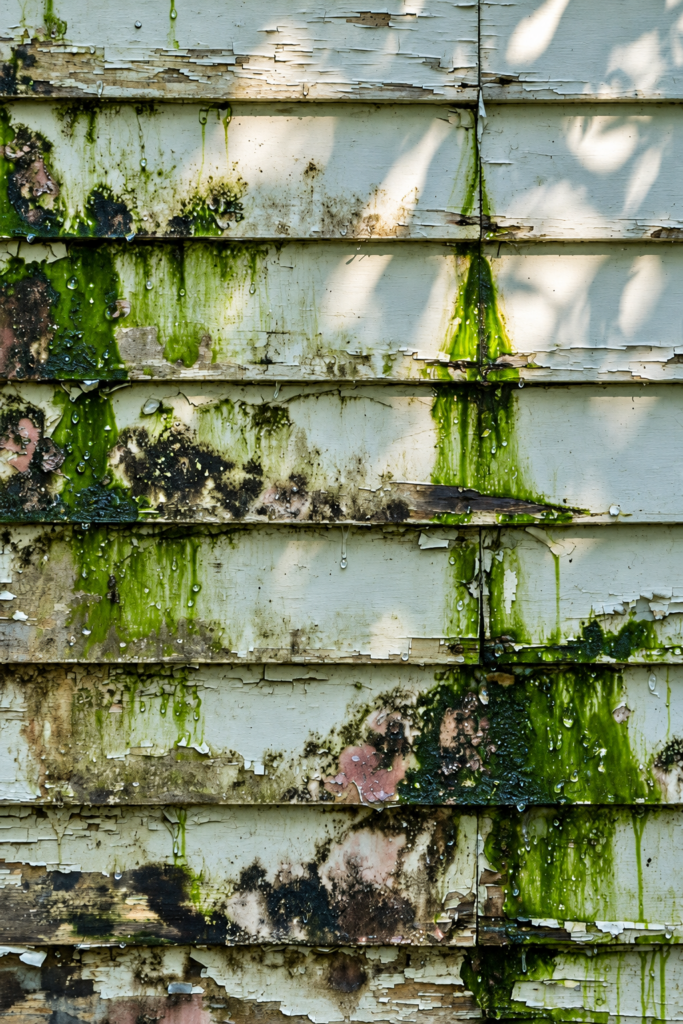
- Water behind siding and around windows
- Flooded garages, utility rooms and wall bases
- Wet carpet and padding
- AC systems affected by water or power loss
See mold after a hurricane or flood and mold after a roof leak.
Lessons
What residents learned
- Photograph the home before the storm.
- Dry wet materials in 24 to 48 hours; EPA says delays invite mold.
- Report claims quickly; newer Florida policies have shorter deadlines.
- Flood and wind coverage are separate.
- Be careful with door-to-door contractors after a storm.
- Check the attic and AC closet even if the house looks fine.
Prepare
Before the next storm
Use the hurricane season checklist and the mold season calendar. Review your insurance, know your flood risk and keep supplies handy. If a storm has already hit, call (352) 668-9909 or send photos.
Sources
Where to verify
Check the National Weather Service, the National Hurricane Center, Alachua County emergency management and FEMA for official data. We summarize general effects here and do not claim to give exact rainfall or damage figures.
Records
Keep your own storm log
After each major storm, write a short note about what happened at your property: rainfall, leaks, power loss, standing water and repairs. Photograph the exterior and interior. Over a few years, this log shows patterns, such as a window that always leaks or a corner of the yard that always floods, and it provides evidence for insurers and for future buyers.
More questions
More questions, answered
Does Gainesville flood
Some areas do flood during heavy rain or storms. Others rarely do. Check your address and your flood zone.
Do I need flood insurance
It is separate from homeowners insurance. Ask your agent whether it makes sense for your location.
How soon should I start drying after a storm
As soon as it is safe. EPA advises drying within 24 to 48 hours.
Where can I check my flood zone
Use the FEMA flood map service with your address and ask your insurance agent. Remember that flooding can occur outside mapped zones.
FAQ
Mold remediation in Gainesville: your questions
Does homeowners insurance cover mold in Florida?
Sometimes. One Florida insurer’s published guidance says mold from covered water damage, such as a burst pipe or covered storm, may be covered up to a limit, with $10,000 standard on its policies, while slow leaks and humidity problems typically aren’t. Your own policy decides, so read its mold section.
How long does mold remediation take?
It depends on the size of the job and how long the structure takes to dry. The written scope should give you a schedule.
How much does mold remediation cost in Gainesville, FL?
It depends on how much material comes out, how wet the structure is and how hard the area is to reach. Published Florida guides put a single moderate room at roughly $1,500 to $6,000; the cost table lists the other job types and where the figures come from. Ask for an itemized written quote and compare line by line, not just the total.
Sources: U.S. EPA mold guidance, Florida Statutes sections 468.8419, 83.51 and 83.56, the Florida Department of Business and Professional Regulation, the Florida Department of Health, and National Weather Service records.
Get a quote
Get a written quote for your Gainesville mold problem
Send a few photos and a short description, and PureGuard Restoration will come back with a written scope of work and price. We will get back to you as soon as we can.
- Call(352) 668-9909
- Text photos(352) 668-9909
- Emailcontact@moldremediationofgainesville.com
- Or use the formName, phone, ZIP code, and what happened.
Ask for the license number when someone calls you back. You can check it on the state lookup.
About us: PureGuard Restoration is a mold remediation company serving Gainesville and Alachua County. We do not test for mold.
Request your written quote
What helps most in the first message
- Where the mold is and roughly how big it looks. A coin, a hand or a sheet of paper next to it helps.
- Where you think the water came from, and whether it’s fixed.
- When you first noticed it, and whether there was a leak, storm or AC problem before that.
- Whether you own, rent or manage the property, and whether you plan to involve insurance.