Home / Mold guide / Types of mold
Types of Mold in Florida Homes: What the CDC Says
There are thousands of mold species and a handful show up in homes again and again. Here are the common ones, what they like, and why the answer to what should I do is nearly the same for all of them.
The short answer
The CDC names Cladosporium, Penicillium and Aspergillus as common indoor molds, and Stachybotrys (often called black mold) grows on wet cellulose such as drywall paper. The CDC says you do not need to know the type before removing mold, because the advice is the same: remove it and fix the moisture.
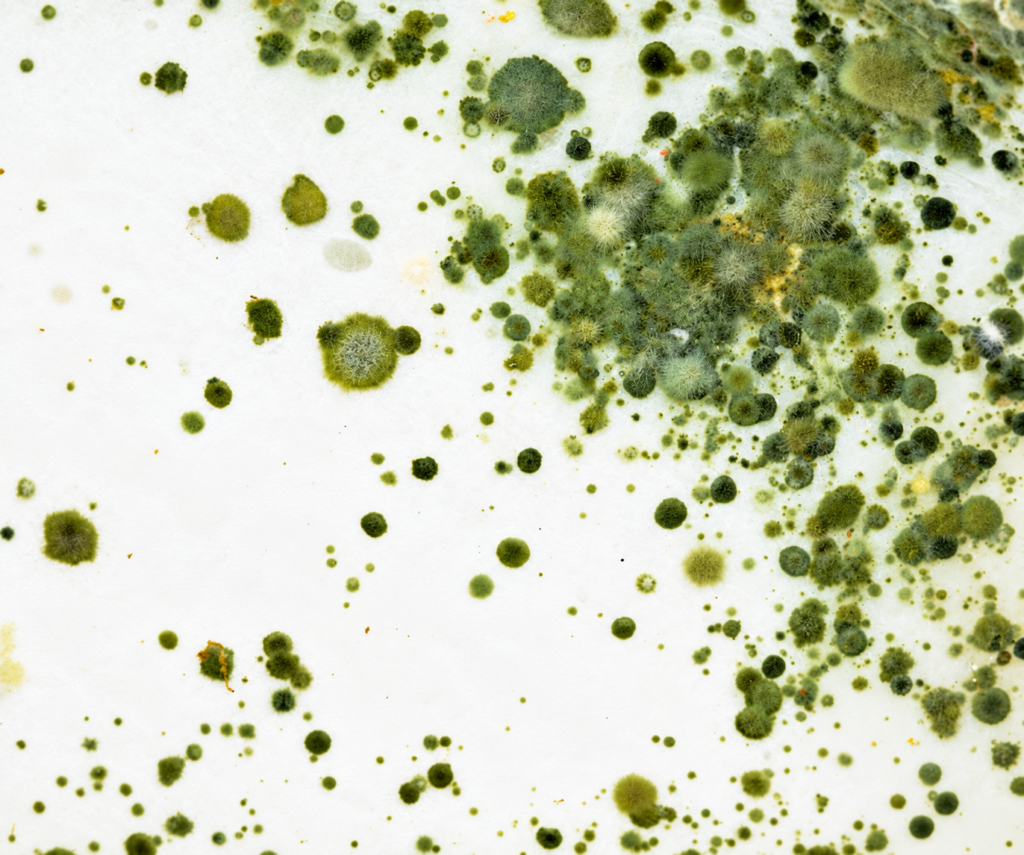
Common indoor molds
What turns up in homes
| Mold | Where it often appears | Notes |
|---|---|---|
| Cladosporium | Common indoors | Named by the CDC as a common indoor mold |
| Penicillium | Common indoors | Named by the CDC as a common indoor mold |
| Aspergillus | Common indoors | Named by the CDC as a common indoor mold |
| Stachybotrys chartarum | Wet drywall paper, fiberboard and other cellulose | Dark greenish-black. See black mold |
Where each mold appears is a general pattern, not a rule. Several species often grow together, and you cannot reliably tell them apart by looking.
Why the type rarely matters
Same steps for all
- Find and stop the moisture.
- Remove or clean the mold. Porous materials that stay moldy usually go.
- Dry everything and keep humidity under control.
- Check the result.
The CDC says there is no need to identify the exact type, because all molds should be handled the same way for health risk and removal. A lab identification can matter for a medical question or a dispute, so ask your doctor or a licensed assessor if either applies. See testing.
Who is more affected
Higher-risk groups
The CDC says people with asthma or mold allergies may have severe reactions, and people who are immune-compromised or have chronic lung disease may develop lung infections. See symptoms and health.
Color
Why the color does not tell you much
People ask whether black, green or white mold is worse. The answer from public health sources is that you cannot tell much from color. Molds change color as they age, and the same species can look different on different materials and in different light. Color is a clue for describing a patch, not a way to judge a risk.
The CDC says Stachybotrys, the mold usually meant by black mold, is not rarer or more dangerous than other molds for most people. See black mold in Gainesville homes.
Lab names
What a lab report can and cannot tell you
If a sample goes to a lab, the report may list genera and spore counts. That can help a doctor or an assessor describe what was in the sample. It cannot tell you whether a particular mold made you sick, and the sample reflects one spot at one moment.
- A list of genera is a snapshot, not a diagnosis.
- Counts vary with the sampling method, the room and the weather.
- There are no accepted limits for what counts as a safe level indoors.
- The CDC does not recommend routine sampling to identify which mold you have.
Outdoors and indoors
Why the same names show up everywhere
Common molds you will see named in articles, such as Cladosporium, Penicillium and Aspergillus, live outdoors on leaves, soil and decaying matter. Their spores come indoors on air, clothing and pets. They only become a home problem when they find something damp to grow on. That is why the plan always starts with moisture.
Useful moments
When knowing the type can matter
- A doctor asks for it as part of an evaluation of your symptoms.
- An assessor is writing a protocol for a large or complicated job.
- A dispute with a landlord, insurer or seller calls for documents.
- A school or commercial building is following a formal remediation plan.
For a normal home with a visible patch and a moisture source, the steps are the same whatever the species: fix the water, remove or clean the mold and dry the area.
Next steps
What to do with a patch you cannot name
- Photograph it with something for scale and note the date.
- Find and fix the moisture source.
- Clean hard surfaces with detergent and water if the area is small, or call a licensed remediator for larger areas.
- Dry the area and keep humidity between 30 and 50 percent.
- Check again in a week. If it returns, the moisture is still there.
Use the DIY or call a pro checklist if you are unsure which path fits.
More questions
More questions, answered
Is green mold safer than black mold
You cannot judge that from color. Treat any indoor growth as something to fix. People with asthma, allergies, lung disease or weakened immune systems are more likely to have problems, according to the CDC.
Can I identify mold by looking at it
Not reliably. Appearance depends on the species, the material, the moisture and the age of the colony. A lab can name a mold, but the cleanup does not change.
Is orange or pink growth mold
It can be. Color alone does not decide it. Slimy pink or orange films in showers are often bacteria or other organisms, and mold can show up in many colors. If it keeps coming back, treat the moisture.
Questions
Common questions
Which type of mold is the worst?
The CDC does not rank them for homeowners. It says to remove any mold you find and fix the moisture, whatever the type.
Is mold in my bathroom the same as mold in my attic?
They may be different species, but the cause is the same: moisture. See the bathroom and closet and attic service pages.
Is mold or mildew different?
The words overlap. See mold vs. mildew.
Sources
Sources and review
Last updated November 8, 2026.
This page is general information, not medical advice. If you or someone in your home has symptoms, talk to a doctor.
Keep reading
Related guides
- Black moldWhat is true and what is not.
- Mold vs. mildewIs there a difference?
- Mold symptoms and healthWhat the CDC says.
Get a quote
Get a written quote for your Gainesville mold problem
Send a few photos and a short description, and PureGuard Restoration will come back with a written scope of work and price. We will get back to you as soon as we can.
- Call(352) 668-9909
- Text photos(352) 668-9909
- Or use the formName, phone, ZIP code, and what happened.
Ask for the license number when someone calls you back. You can check it on the state lookup.
About us: PureGuard Restoration is a mold remediation company serving Gainesville and Alachua County. We do not test for mold.
Request your written quote
What helps most in the first message
- Where the mold is and roughly how big it looks. A coin, a hand or a sheet of paper next to it helps.
- Where you think the water came from, and whether it’s fixed.
- When you first noticed it, and whether there was a leak, storm or AC problem before that.
- Whether you own, rent or manage the property, and whether you plan to involve insurance.